Daihonzan Senjuin
The Oldest Sub-temple on Mt. Shigi
History of Senjuin
The Oldest Sub-temple on Mt. Shigi
In the mid-sixth century, Prince Shotoku named this sacred mountain "Shigisan" -- meaning "a mountain worthy of faith and reverence" -- and erected temple buildings upon its slopes. During the late Heian period, the Goma Hall of Senjuin was established by Myoren Shonin, the patriarch who revived the temple. Later, in 1572 (Tensho 5), when the fires of war set by Matsunaga Hisahide engulfed over sixty structures on Mt. Shigi, it was Kaishin Shonin, a monk of Senjuin, who rescued the principal image of Bishamonten. According to the "Senjuin Daidaiki," Kaishin built a temporary hall upon the ruins of the main hall to enshrine the sacred image and subsequently rebuilt Senjuin.
Thus, the founder of this temple is Prince Shotoku, the restoring patriarch is Myoren Shonin, and the restoring progenitor is the Great Acharya Kaishin Shonin.
Daihonzan Senjuin is the oldest and most distinguished sub-temple (tacchu) on Mt. Shigi. A tacchu is a temple complex in which multiple sub-temples share a single main hall.
Among these, Senjuin served as the residential quarters of the successive head priests of Shigisan-ji Temple, whose disciples were dispatched to the other sub-temples of Gyokuzo-in and Jofuku-in. The "Shigisan Zakki" records that "Senjuin is the head household of Mt. Shigi." Counting from Kaishin Shonin, the disciple of the 6th generation Kaiyo, named Kakunyo, became the first head priest of Gyokuzo-in, while the disciple of the 10th generation Kaisei, named Kaiei, restored Jofuku-in.
Furthermore, the 17th generation Shinko became the first in the Shigisan Shingon sect to serve as Great Acharya of the Goshichinichi Mishiho ceremony and attained the rank of Shingon Choja, while the 18th generation and current Chief Priest, Shinzui, is the former Kancho (Head Administrator) of the Shigisan Shingon sect and former Hosshu (Dharma Master) of Chogosonshi-ji Temple.
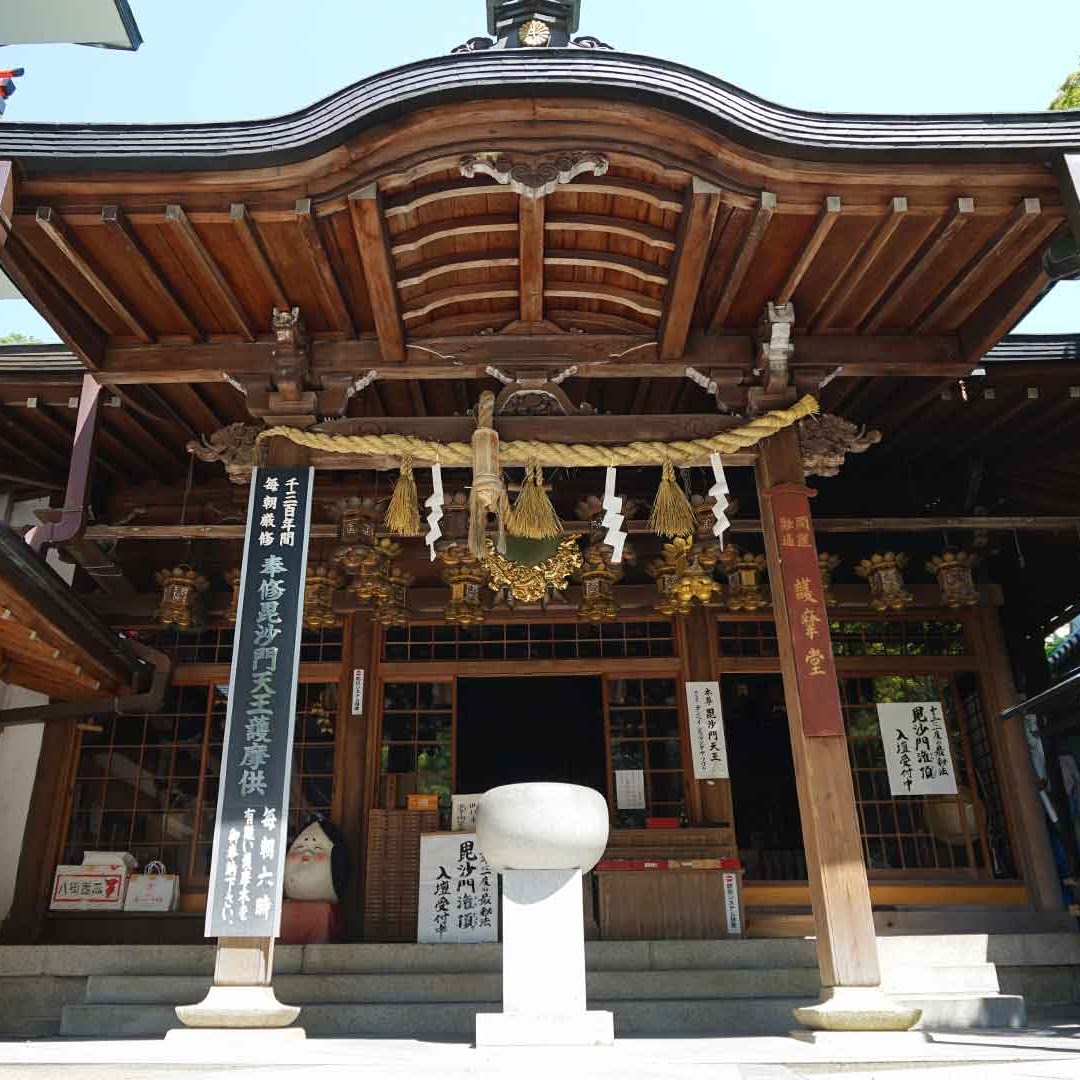
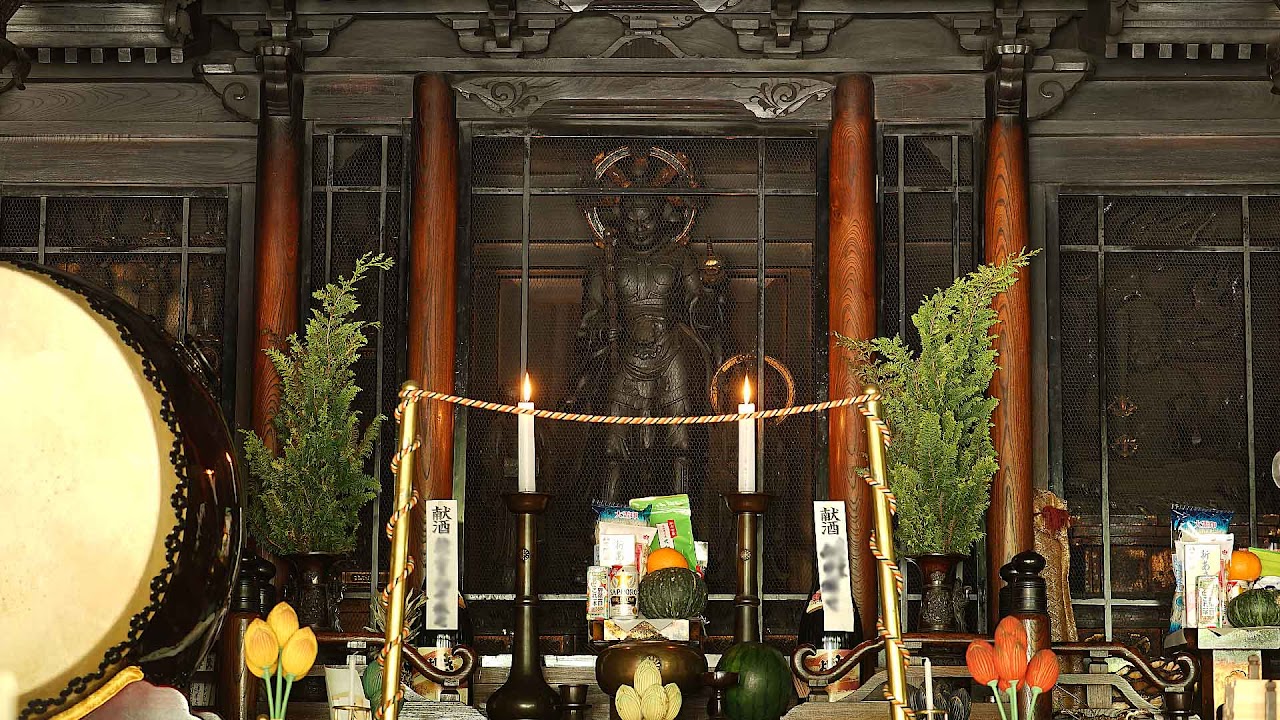
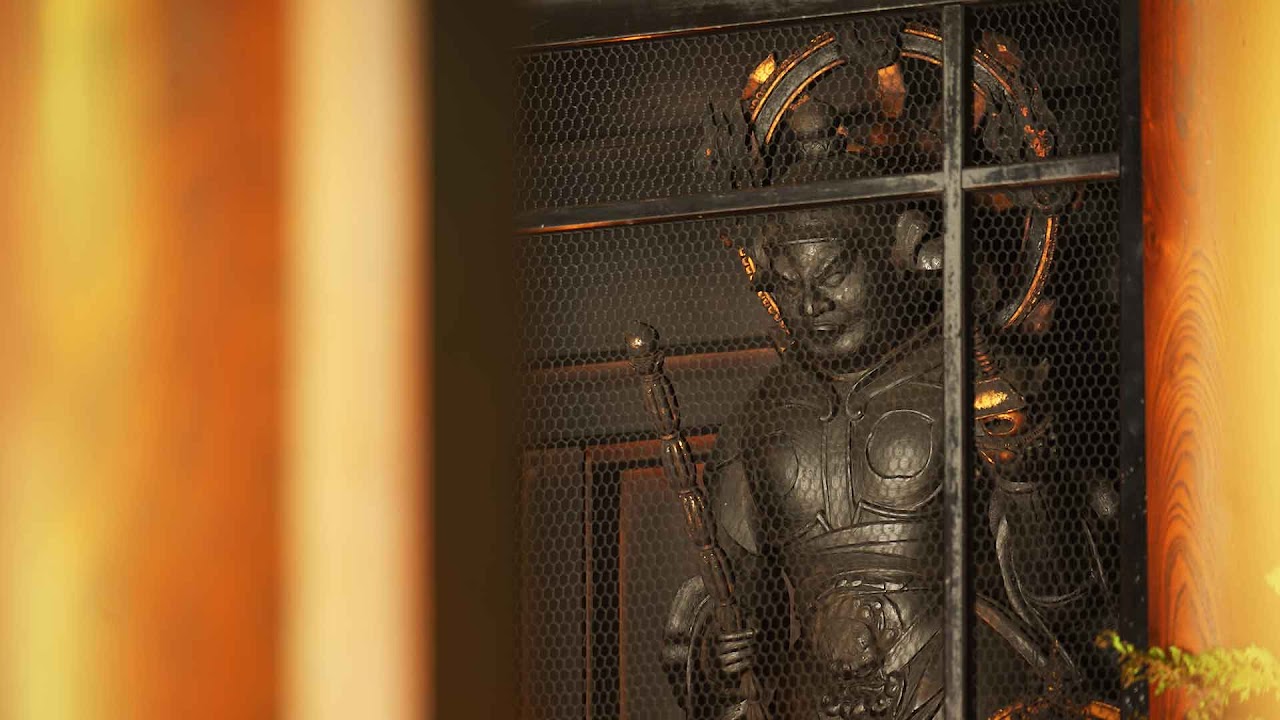
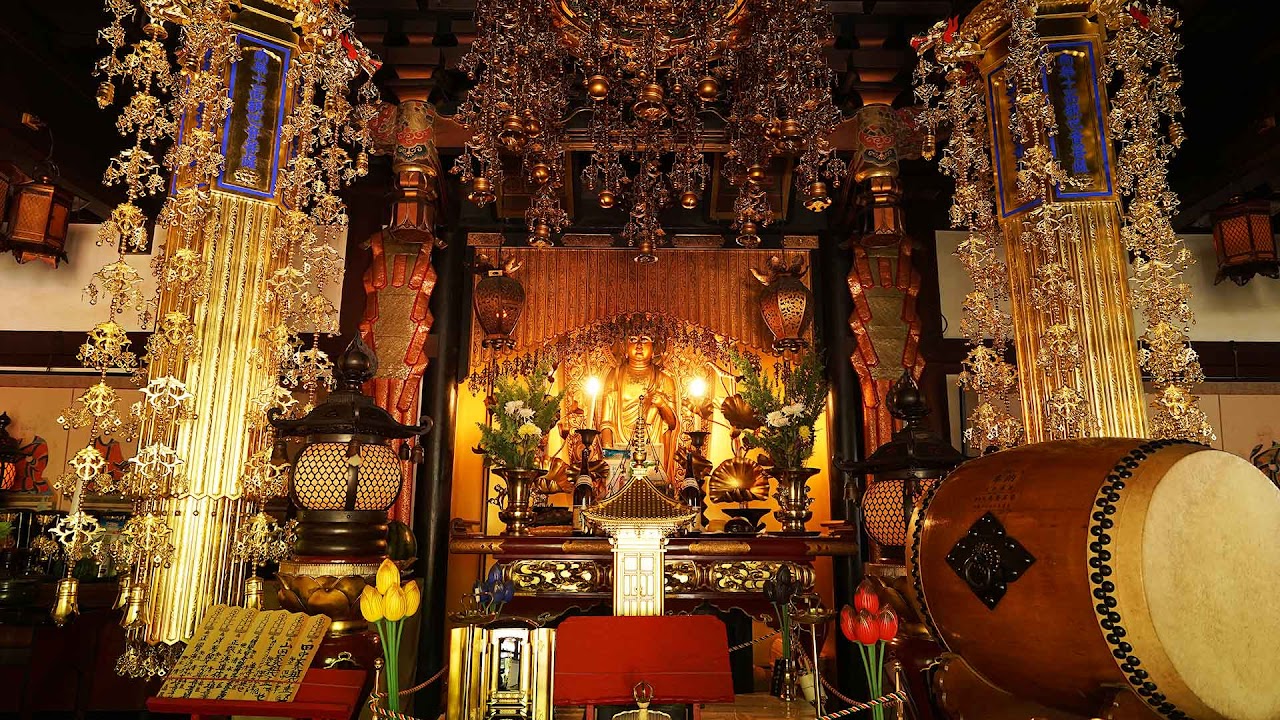
The Goma Hall enshrines Bishamonten, the Kannon Hall enshrines Juichimen Kannon (Eleven-faced Avalokiteshvara), the Zenikame Hall enshrines Zenikame Zenshin, and the Daihikaku enshrines Senju Kannon (Thousand-armed Avalokiteshvara). To this day, the sacred rite of the Bishamon Goma has been performed without interruption.
Senjuin is the fundamental practice hall where the Daihannya Prayer and Bishamon Goma are performed to convey all manner of supplications to Bishamonten, and it is also the oldest temple lodging (shukubo) on the mountain where pilgrims may stay.
Chief Priest Shinzui Tanaka
The 18th Chief Priest of Senjuin
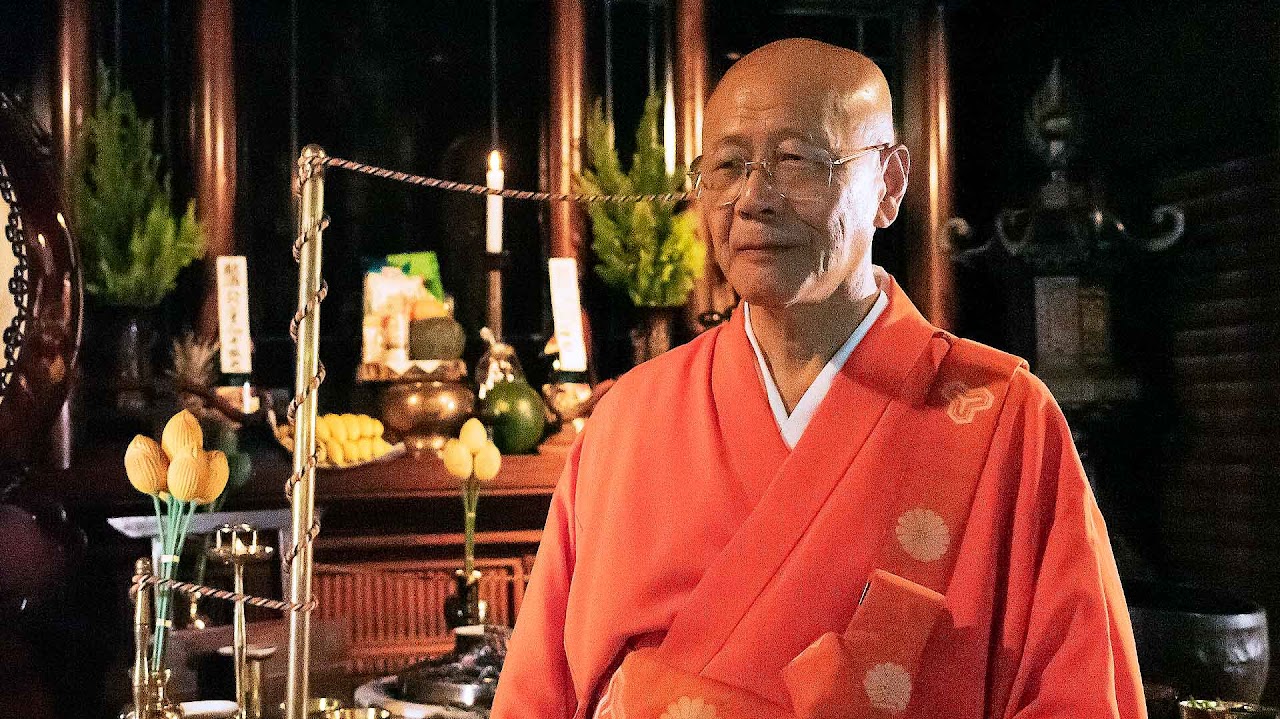
His Eminence Shinzui, the 18th Chief Priest, previously served as Head Administrator (Kancho) of the Shigisan Shingon sect and Dharma Master (Hosshu) of Chogosonshi-ji Temple. He now serves as Chief Priest of Senjuin, presiding over the daily Goma prayer rituals and devoting himself to the spiritual well-being of all visitors.
An interview with His Eminence has been published on "Inori no Kairo" (The Corridor of Prayer), a website introducing temples in Nara Prefecture. He speaks about the history of Senjuin, his devotion to the Goma ritual, and the allure of Mt. Shigi. We invite you to read it.
Goma Hall
Senjuin: Temple of the Goma
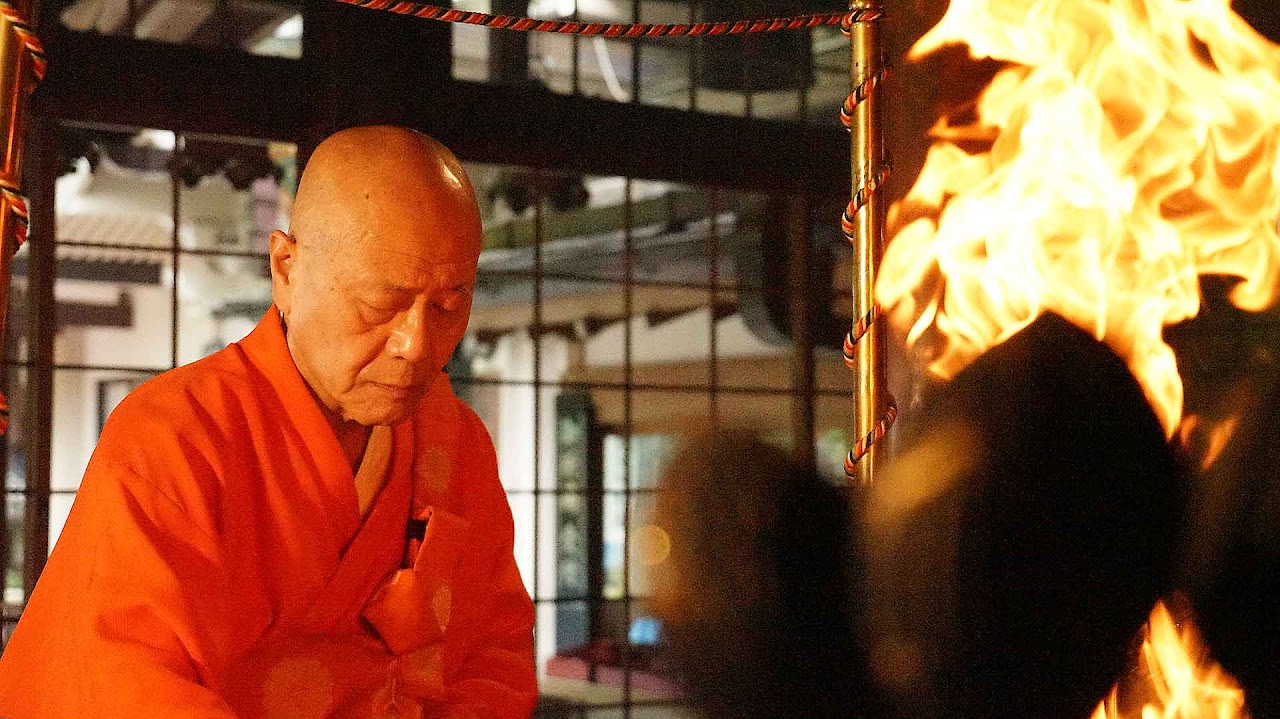
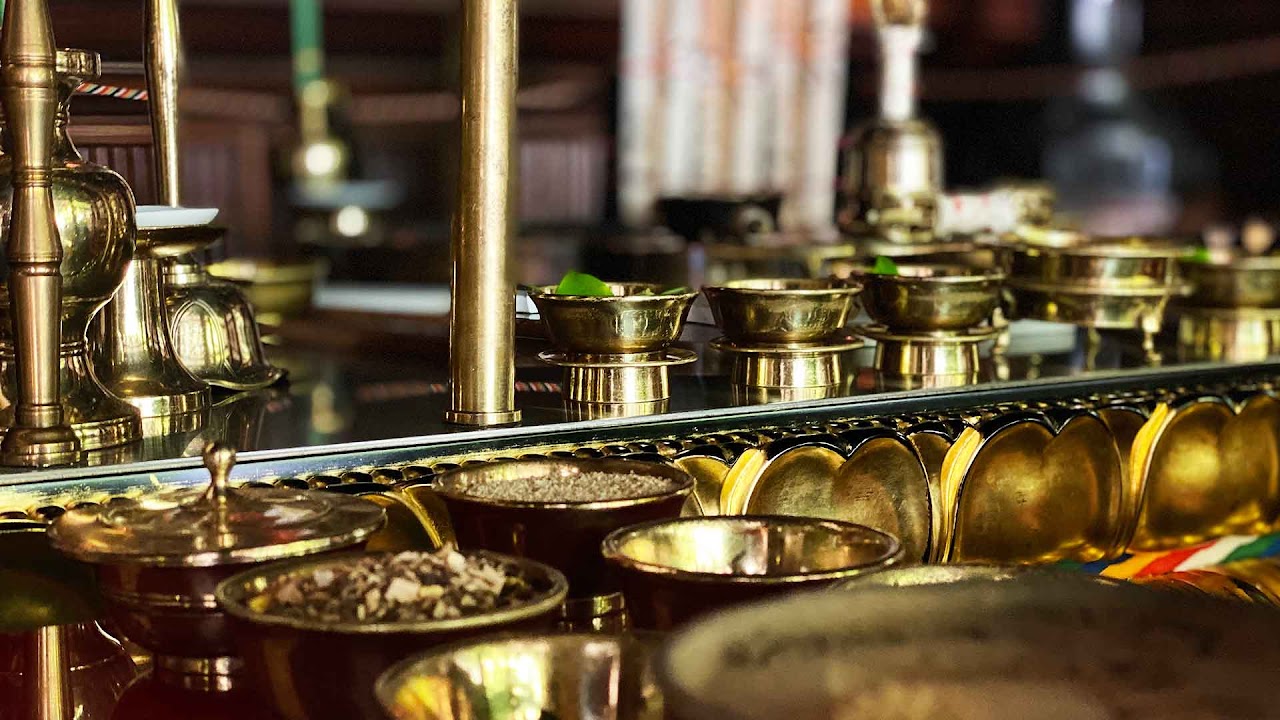
In the Goma Hall of Senjuin, the Bishamon Goma fire ritual has been performed every morning without fail for 1,100 years since its inauguration by Myoren Shonin. This unbroken tradition of Goma is unique to Senjuin, which is why the temple is known on Mt. Shigi as "Senjuin, the Temple of Goma." The ritual is renowned for bestowing blessings of business prosperity, good fortune, fulfillment of heartfelt wishes, warding off evil, and protection from inauspicious directions.
The Supreme Secret Rite: Bishamon Goma
The Bishamon Goma is a secret ritual transmitted through generations at Senjuin. It is the most spiritually efficacious of all prayer rituals dedicated to Bishamonten as taught by orthodox Shingon Esoteric Buddhism. Among the heavenly deities (Tenbu), only the highest-ranking possess the Goma rite.
The Bishamonten of Senjuin is affectionately known as "Bishamonten of the Goma" and, together with the principal image of the main hall, has been the object of profound devotion for centuries.
Temple Grounds Guide
Within the precincts of Senjuin, you will find various halls and facilities that have been carefully preserved throughout its long history. We invite you to take a leisurely stroll through the grounds and offer your prayers at each sacred site.
Kannon Hall
Fertility & Protection from Misfortune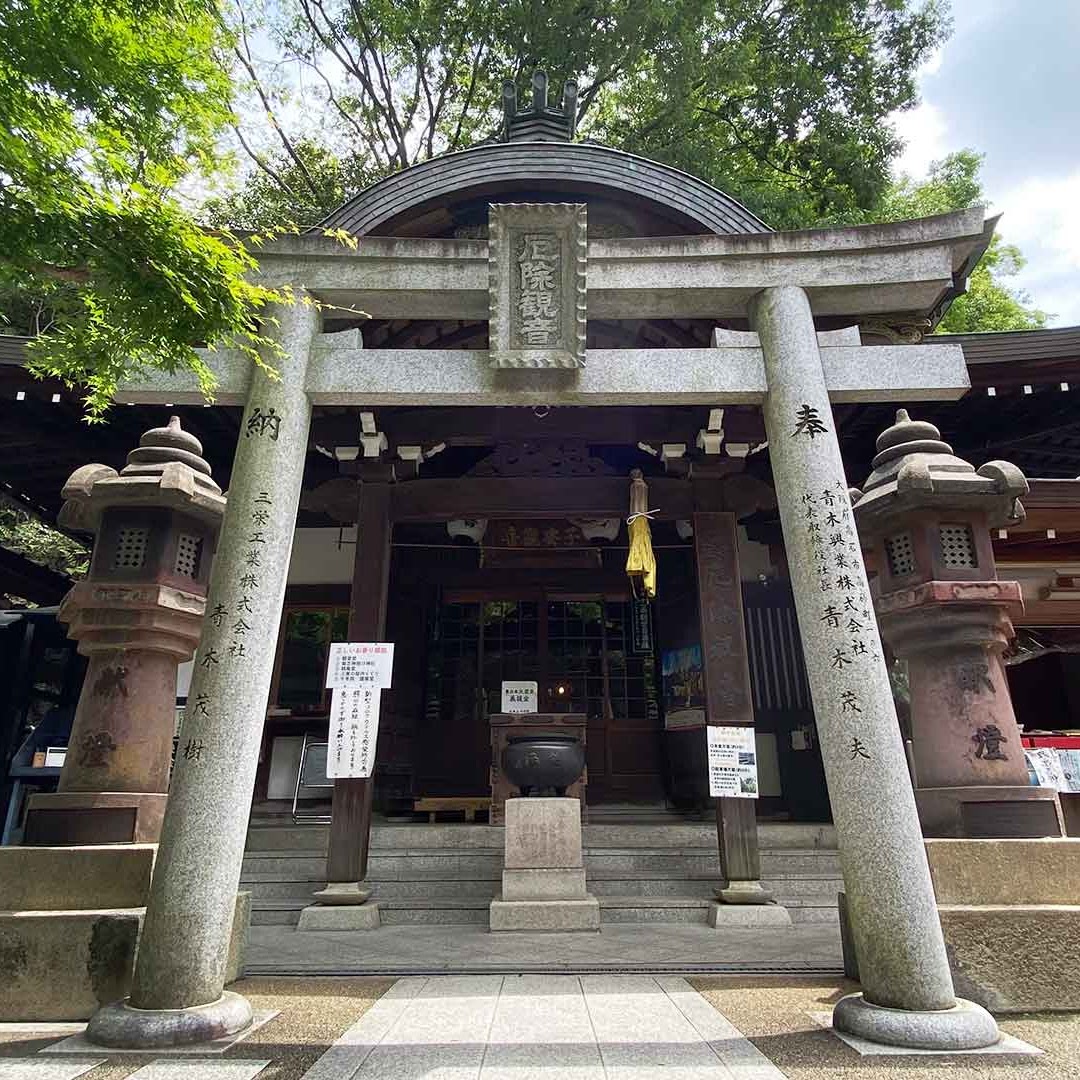
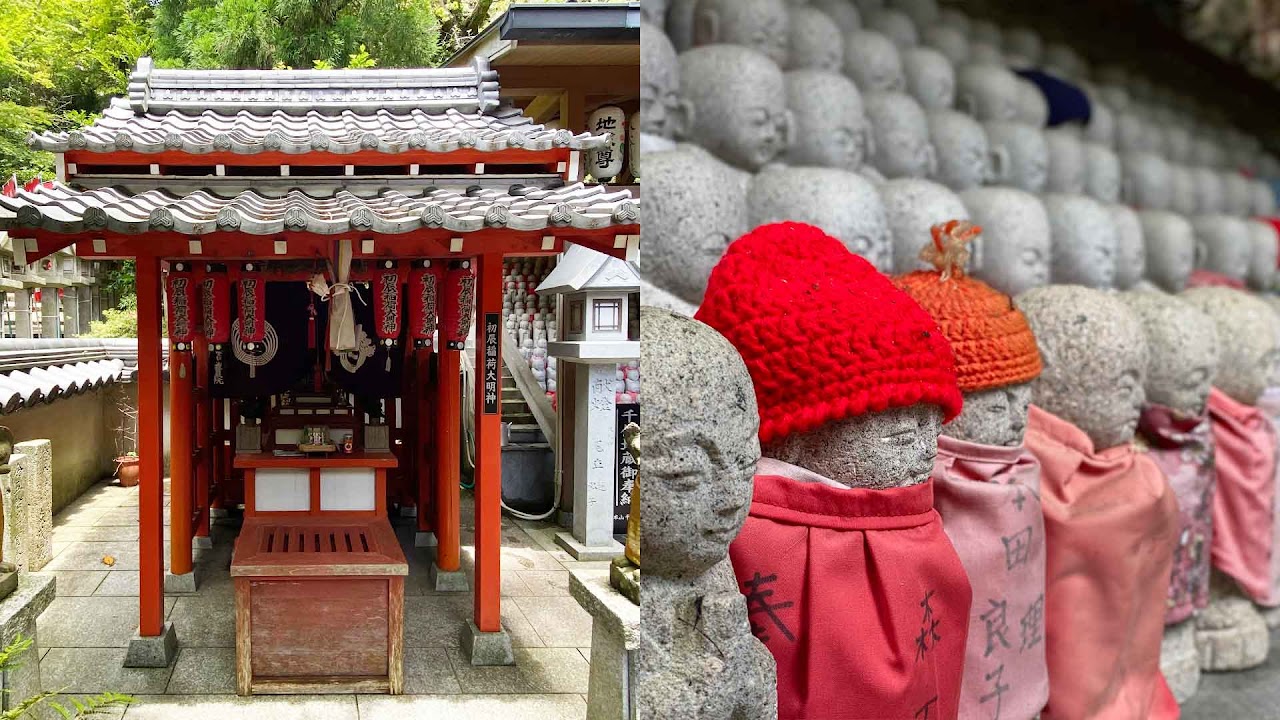
During the Taisho era, the 16th Chief Priest, Shinei Daioshon, received a sacred manifestation of Kannon from Hase-dera Temple in Nara and built this hall to enshrine the deity as the Kannon of Protection from Misfortune. It is especially revered for blessings of fertility and safe childbirth.
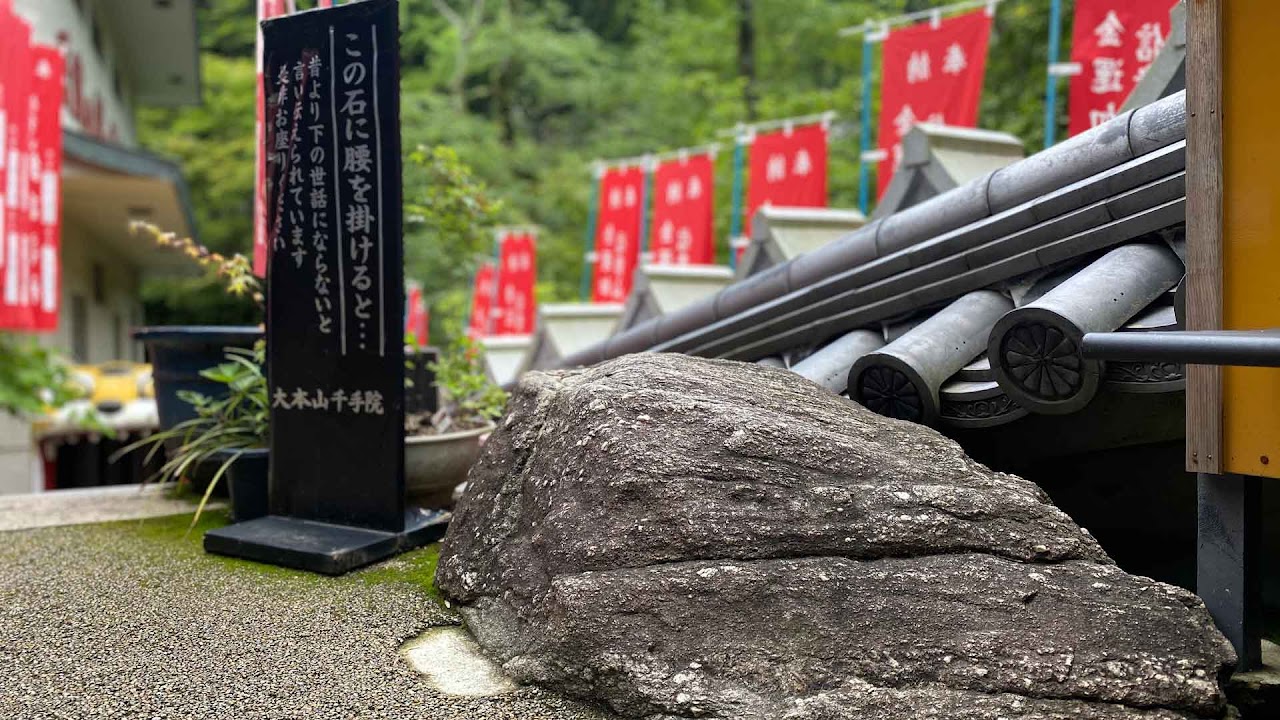
Surrounding the Kannon Hall are the Hattatsu Inari shrine and the Sentai Jizo (Thousand Jizo Statues). Within the grounds, there is also the Stone of Self-Reliance, which is said to grant independence in old age to those who sit upon it.
Zenikame Hall
The Only One in Japan - Financial Fortune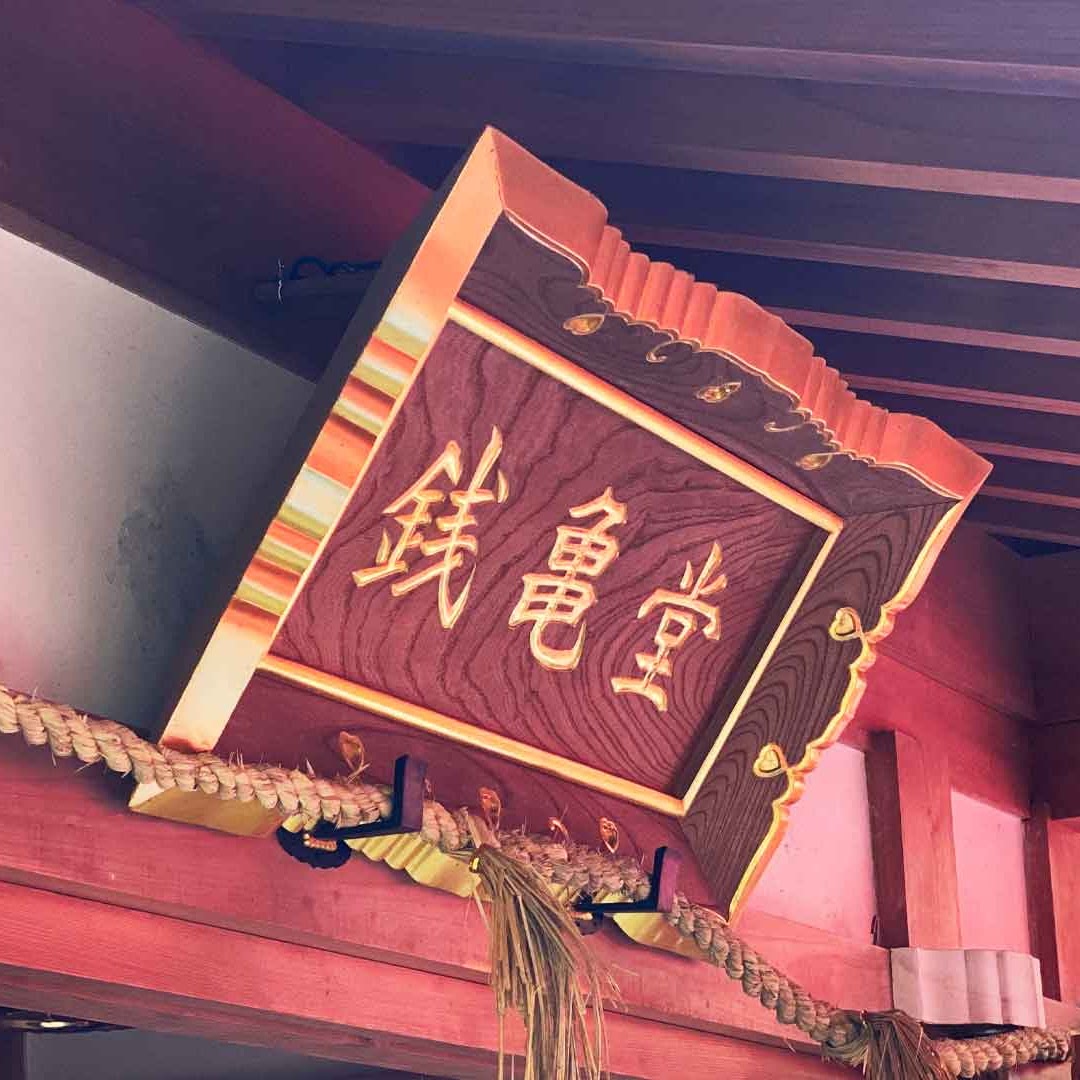
The Only Financial Fortune Hall in Japan: Origins of Zenikame Hall
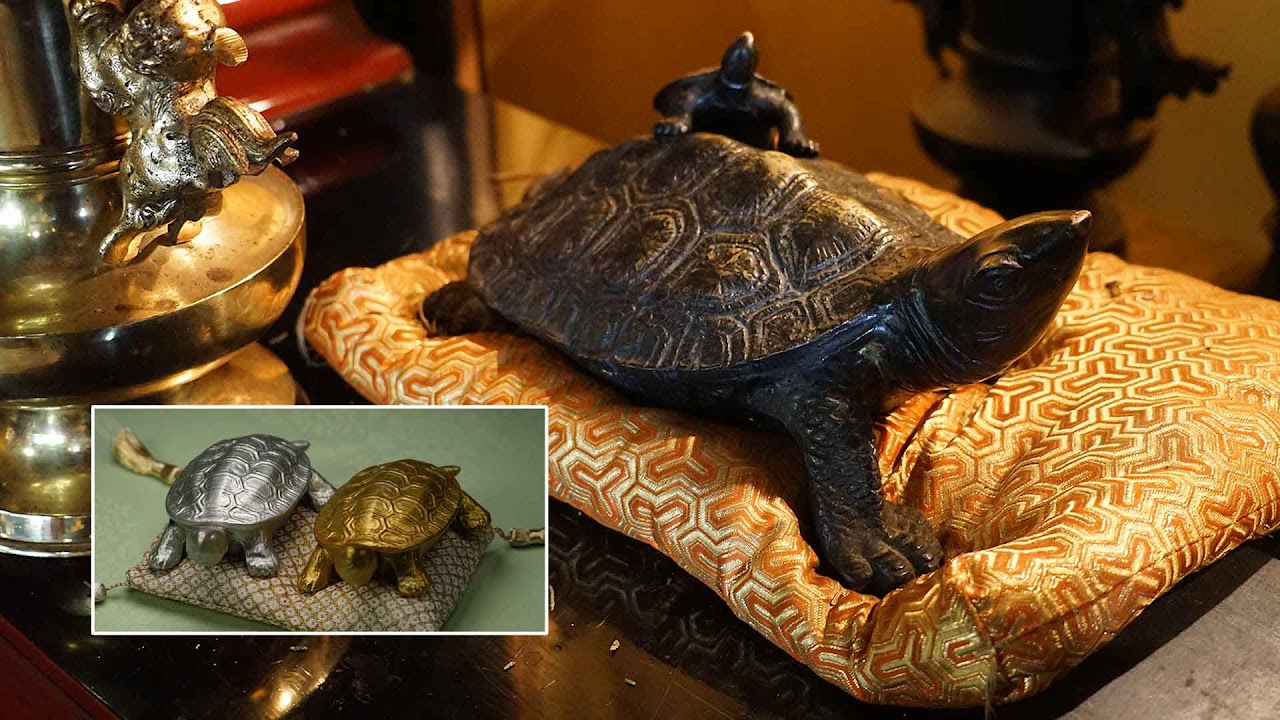
Zenikame Hall enshrines Zenikame Zenshin, the divine messenger of Bishamonten, and is the only hall in Japan dedicated to bestowing financial fortune.
During mountain ascetic meditation on Mt. Omine, the Chief Priest of Senjuin received a sacred vision in which a noble deity appeared riding upon a turtle with a golden shell. The deity proclaimed: "I am the benevolent deity who brings peace to those suffering from unfulfilled desires. Those who place their faith in me shall surely attain what they seek" -- that is to say, "the suffering of unmet desires shall be eased, and that which has stagnated shall begin to flow once more." Thus, Zenikame Zenshin was enshrined and Zenikame Hall was established.
Blessings of Zenikame Zenshin
Beyond financial fortune, Zenikame Zenshin is said to bestow a wide range of blessings including academic success and good health. Many visitors have shared their heartfelt gratitude.
- A struggling company saw its revenues recover and increase substantially
- A visitor won the lottery two months after visiting and was able to repay their debts
- Visitors passed employment examinations and professional certification tests
- A person with cerebral thrombosis made a full recovery within four months
How to Visit
Please first visit the Binbogami-yoke Shrine to ward off misfortune, then proceed to Zenikame Hall.
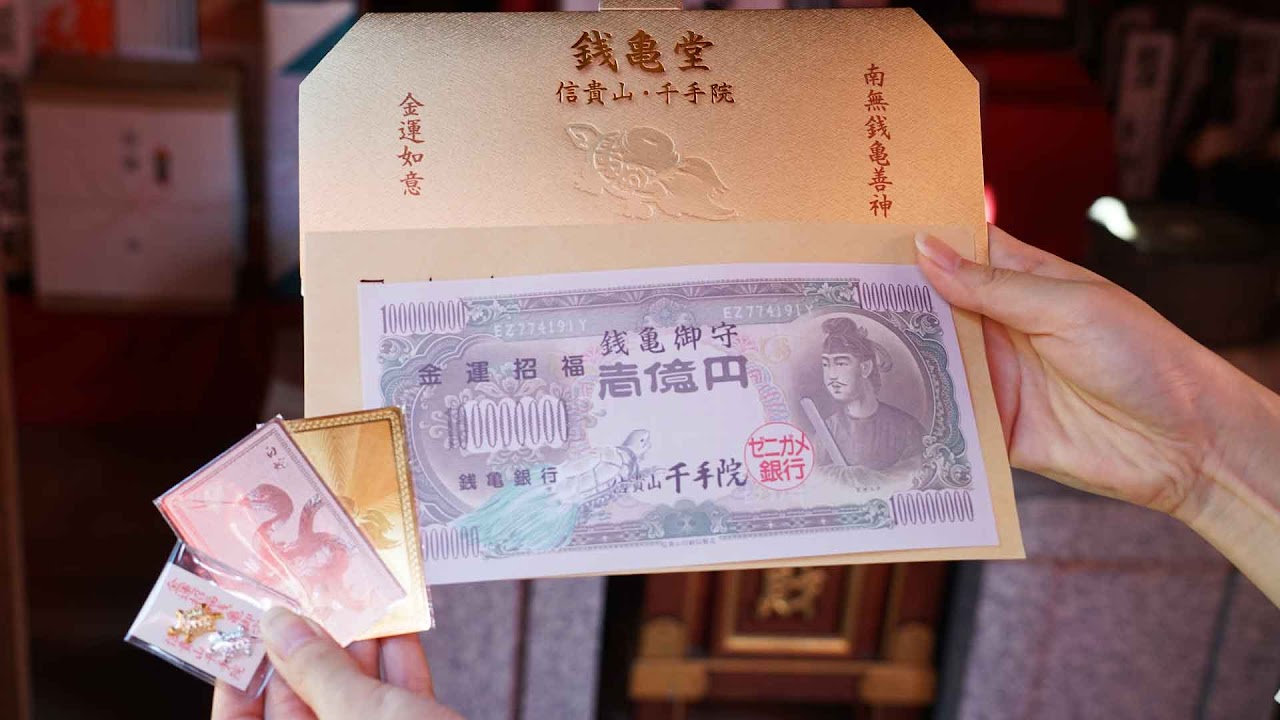
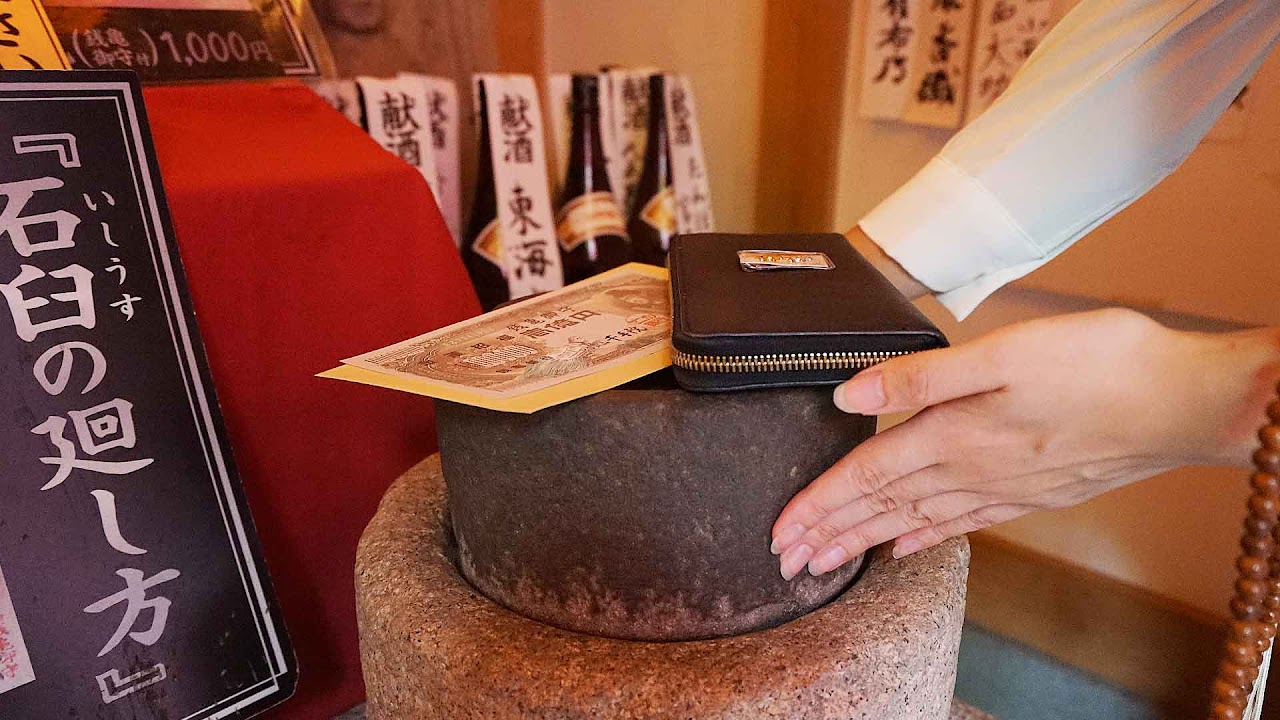
- At the amulet counter, please receive the Zenikame charm containing the "Financial Fortune Zenikame Amulet" and the "100 Million Yen Note"
- Place your Zenikame charm and wallet upon the stone mill
- While chanting "Namu Zenikame Zenshin," turn the stone mill to the right
Prayer to Zenikame Zenshin
At the Goma Hall, prayers for financial fortune, business prosperity, and other blessings are offered, as well as prayers of gratitude (thanksgiving) to Zenikame Zenshin.
Zenikame Zenshin Spirit Division
For those who wish to enshrine Zenikame Zenshin in their home or place of business, gold and silver spirit divisions (gobunrei) are available. After a Zenikame prayer ritual, the spirit is consecrated and ensouled. Those residing at a distance are welcome to inquire by telephone.
Zenikame Festival
The Zenikame Festival is held every April. Please contact Senjuin for details.
Binbogami-yoke Shrine
Ward Off the God of Poverty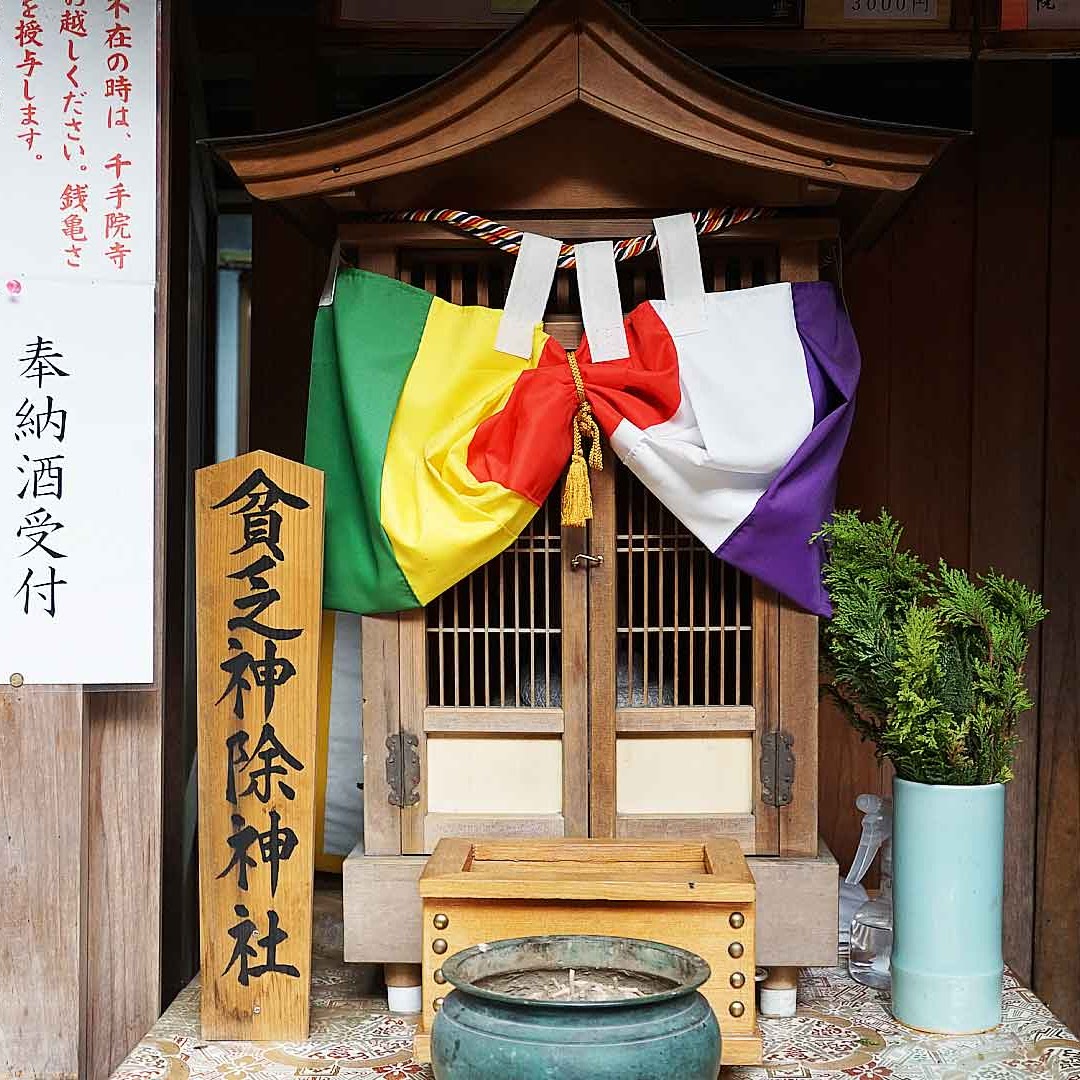
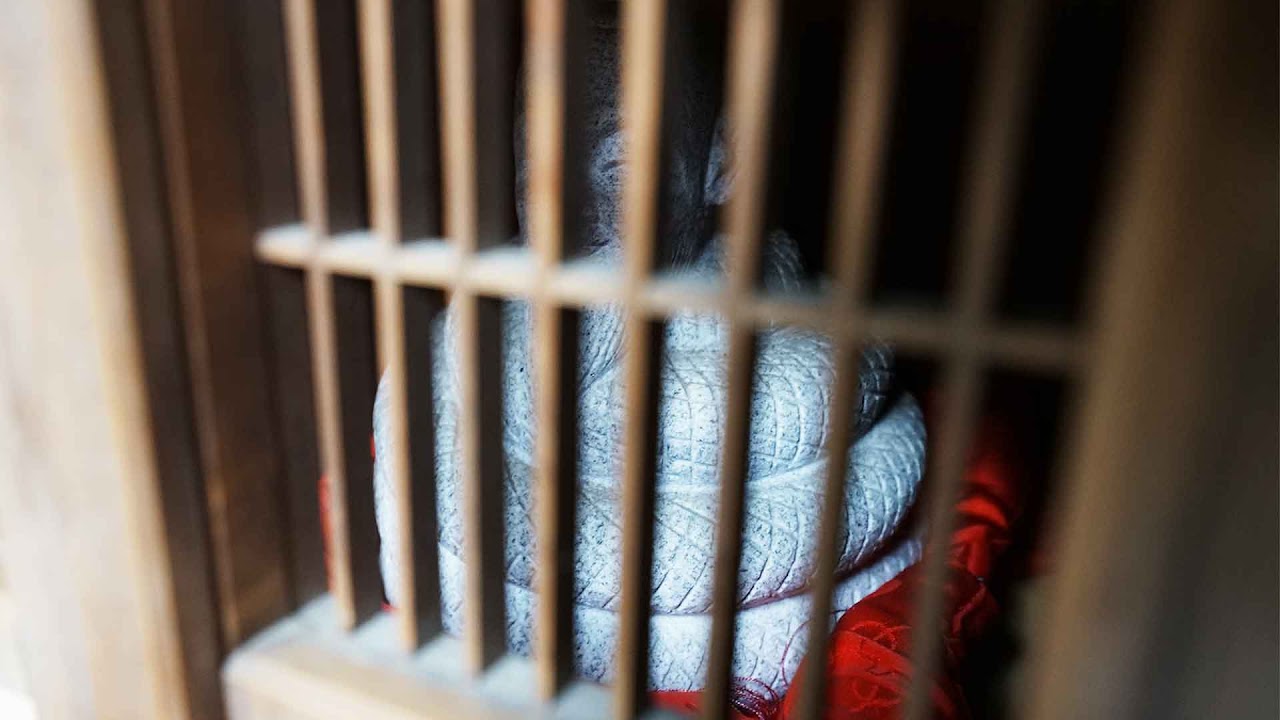
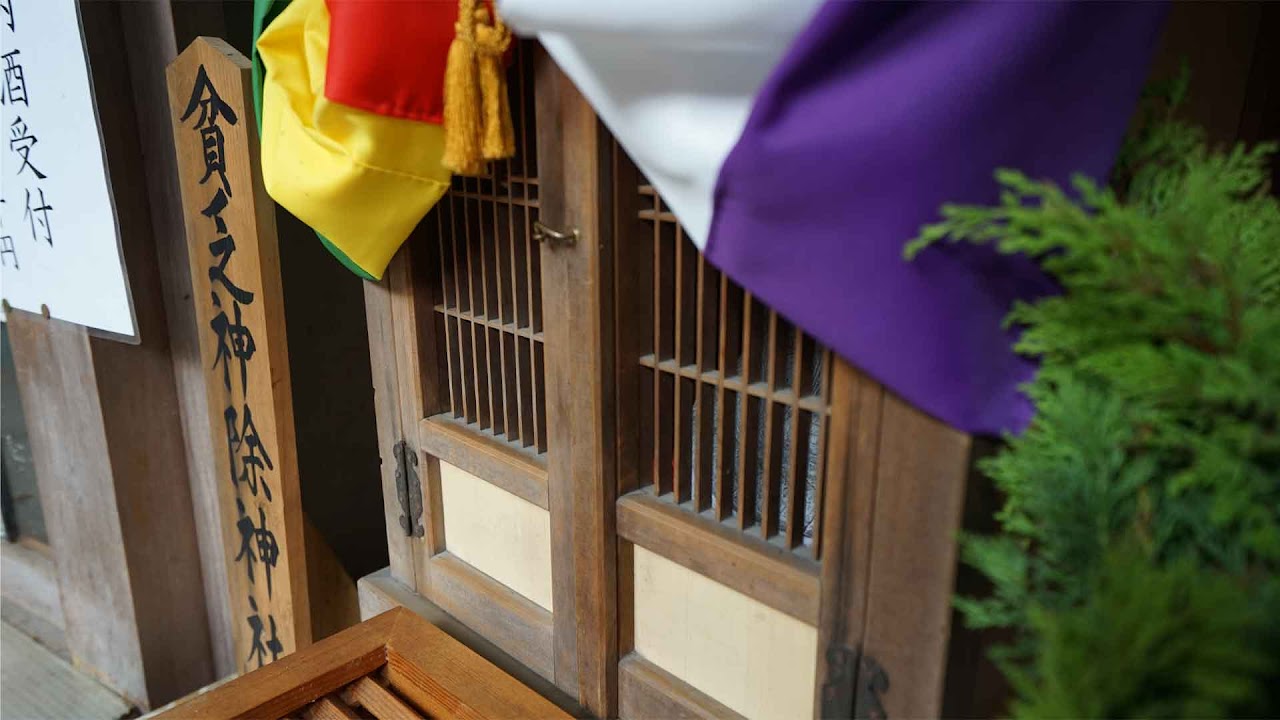
Visiting this shrine together with Zenikame Hall amplifies the blessings you receive.
No matter how many times you pray, the blessings never seem to appear. Even when blessings come, they do not last. This may be the work of the God of Poverty (Binbogami). The Binbogami, also known as the God of Greed, takes the form of a five-colored toad. The deity that dispels this malevolent spirit is Uga Benzaiten, who bears the face of an elderly sage and the body of a coiled serpent.
Carry the Binbogami-warding charm and receive divine protection.
Sacred Mantra
Namu Byakujagyo Ugaya Jaya Gyarabei Shindamani Hinten Un Sowaka
Blessing of the Three Tigers / Tainai-kuguri
Good Fortune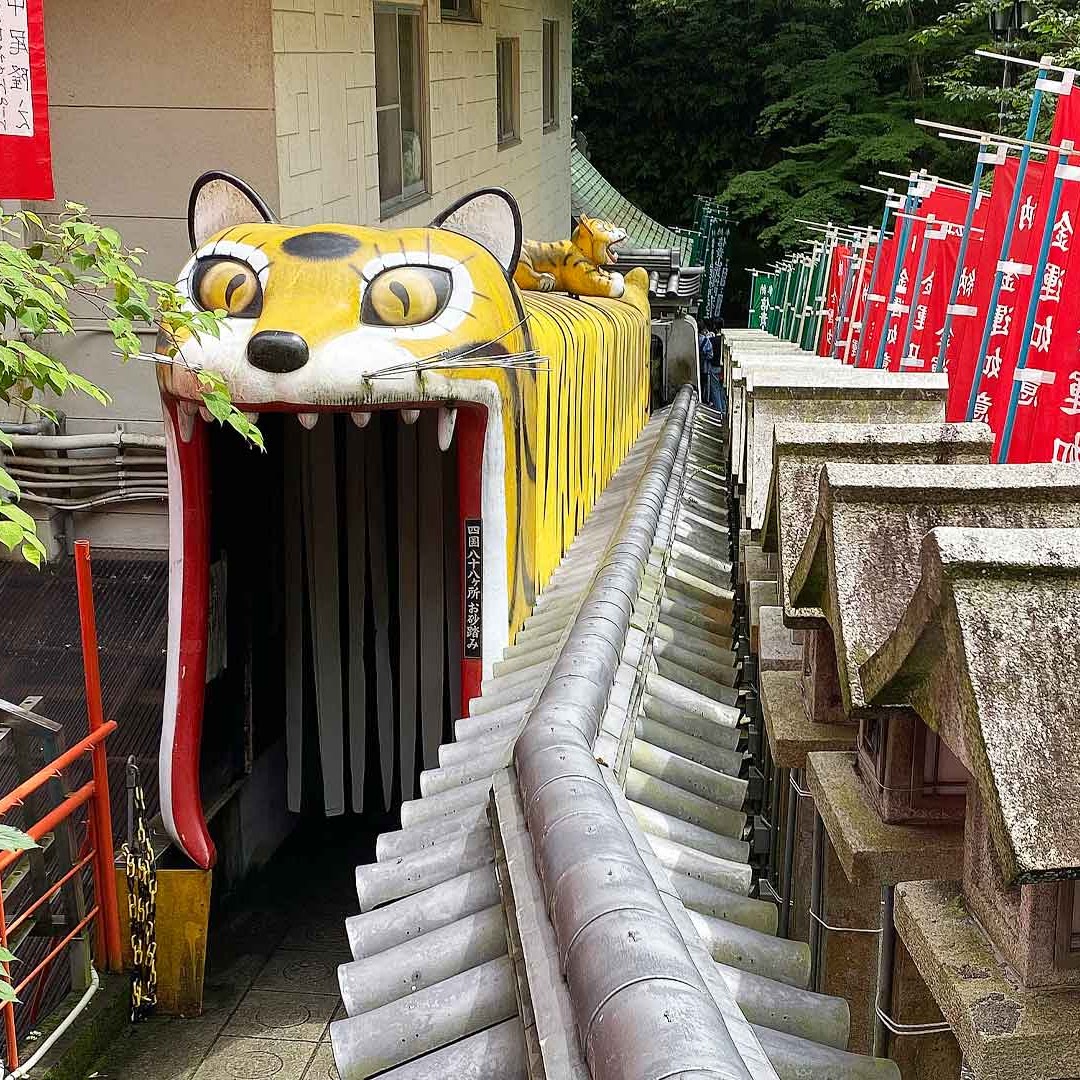
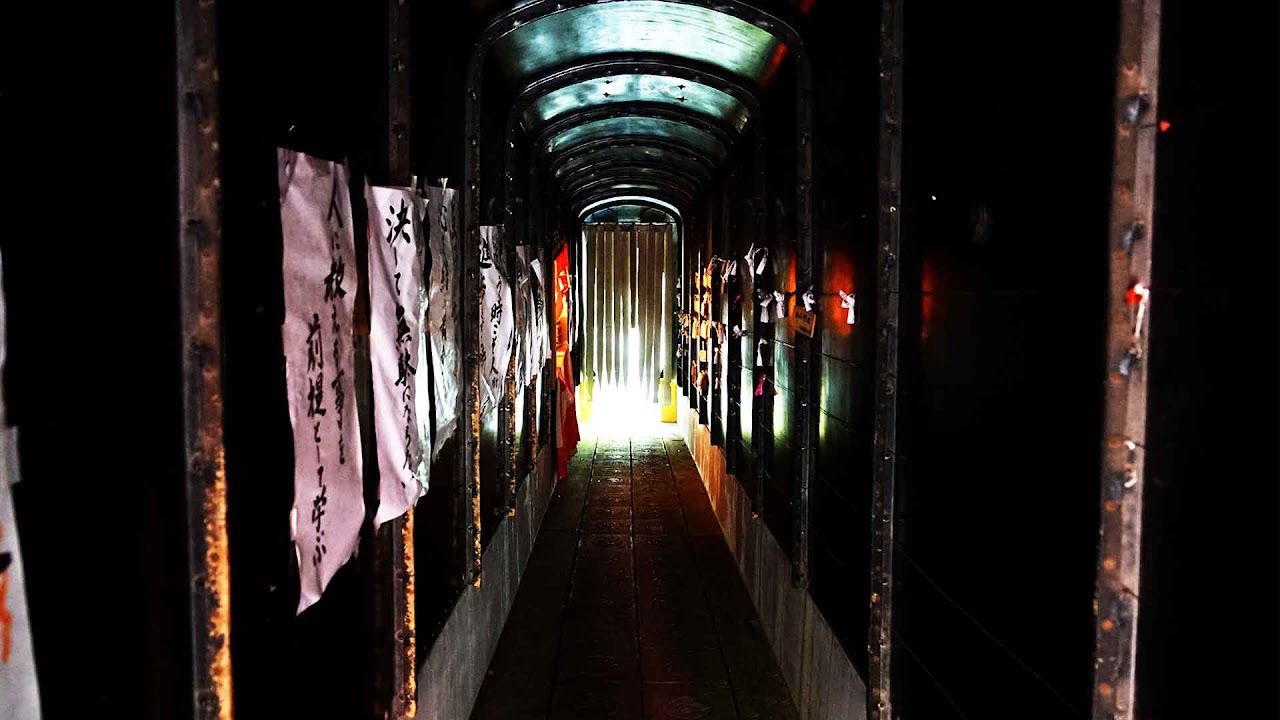
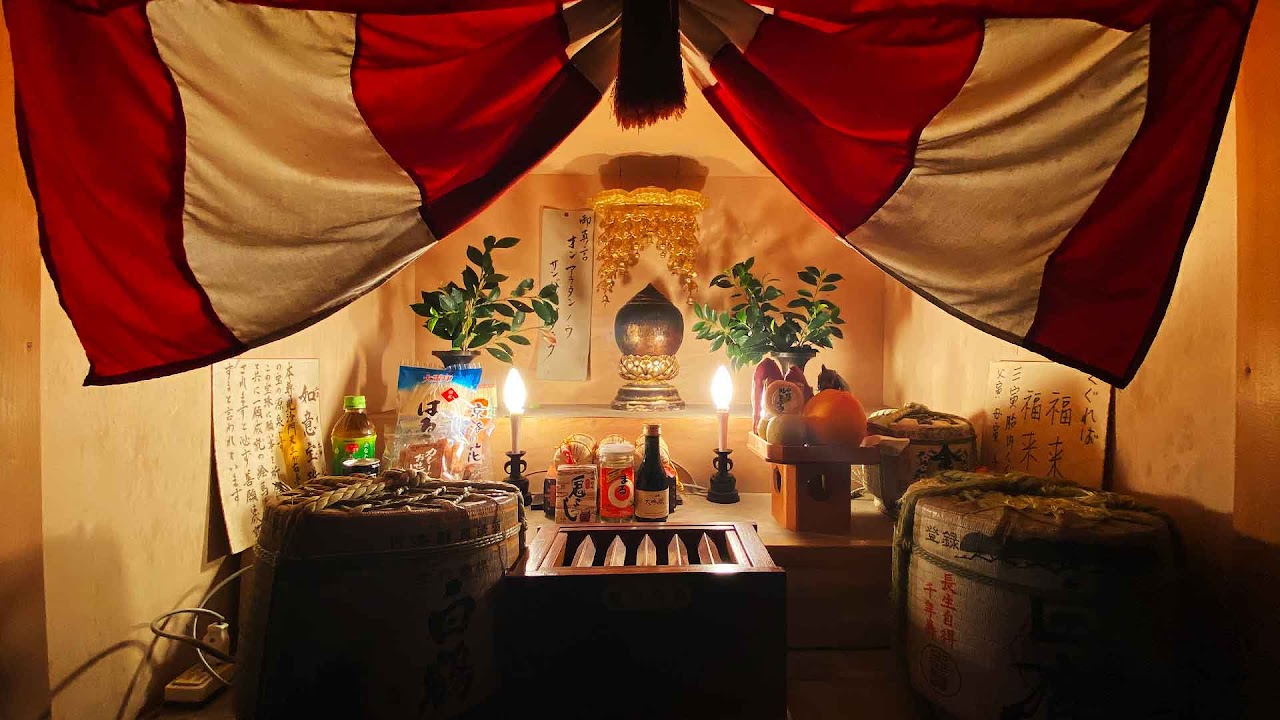
This tunnel represents the union of father tiger, mother tiger, and child tiger. By passing through it, you receive the threefold blessing of the tigers. Beneath your feet lies the sand from the 88 Sacred Sites of Shikoku, and along the way, the Nyoi Hoju (Wish-Fulfilling Jewel) -- the source of the treasures held by Bishamonten -- is enshrined.
This is a popular spot for children as well, and the whole family can enjoy the experience together.
Daihikaku
Training Hall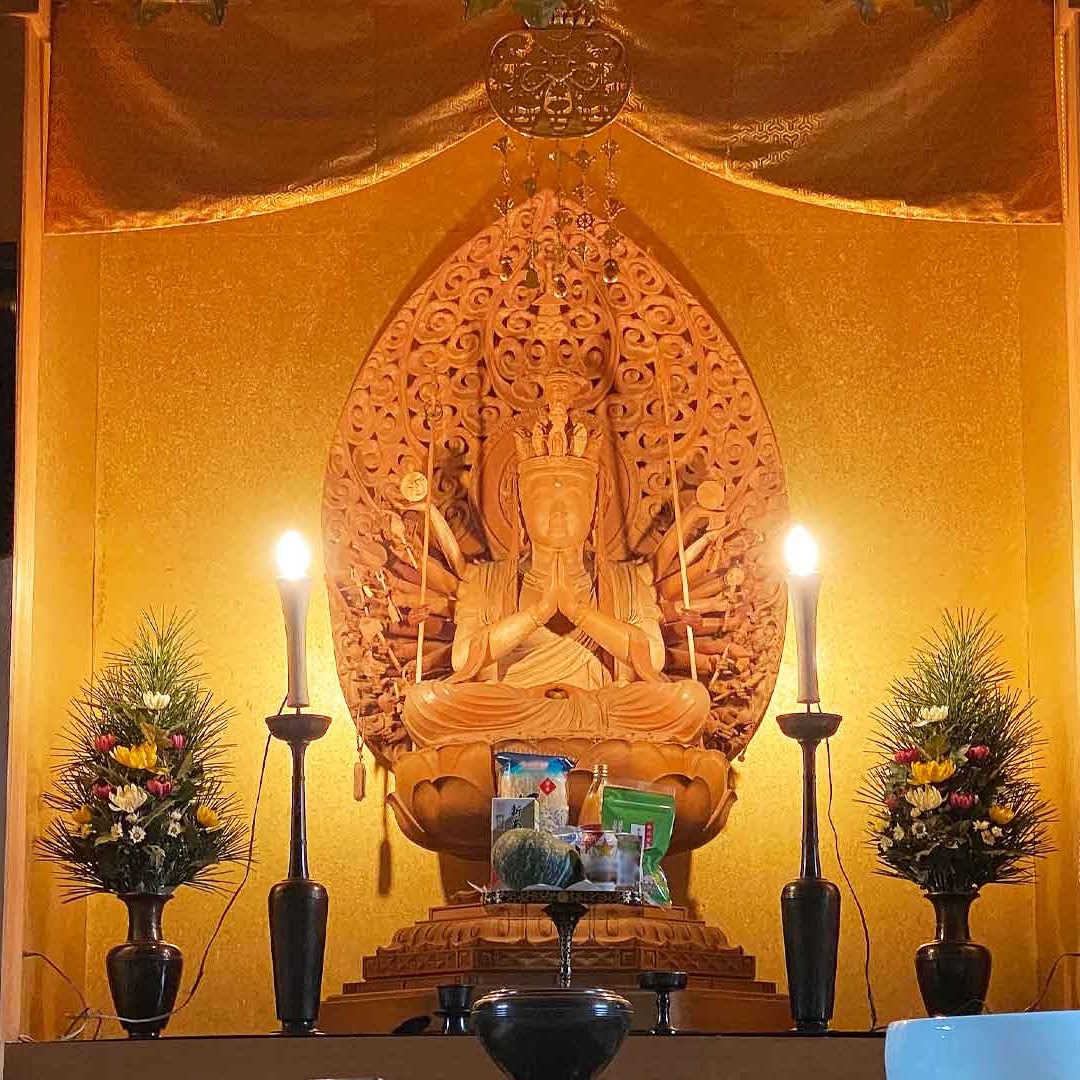
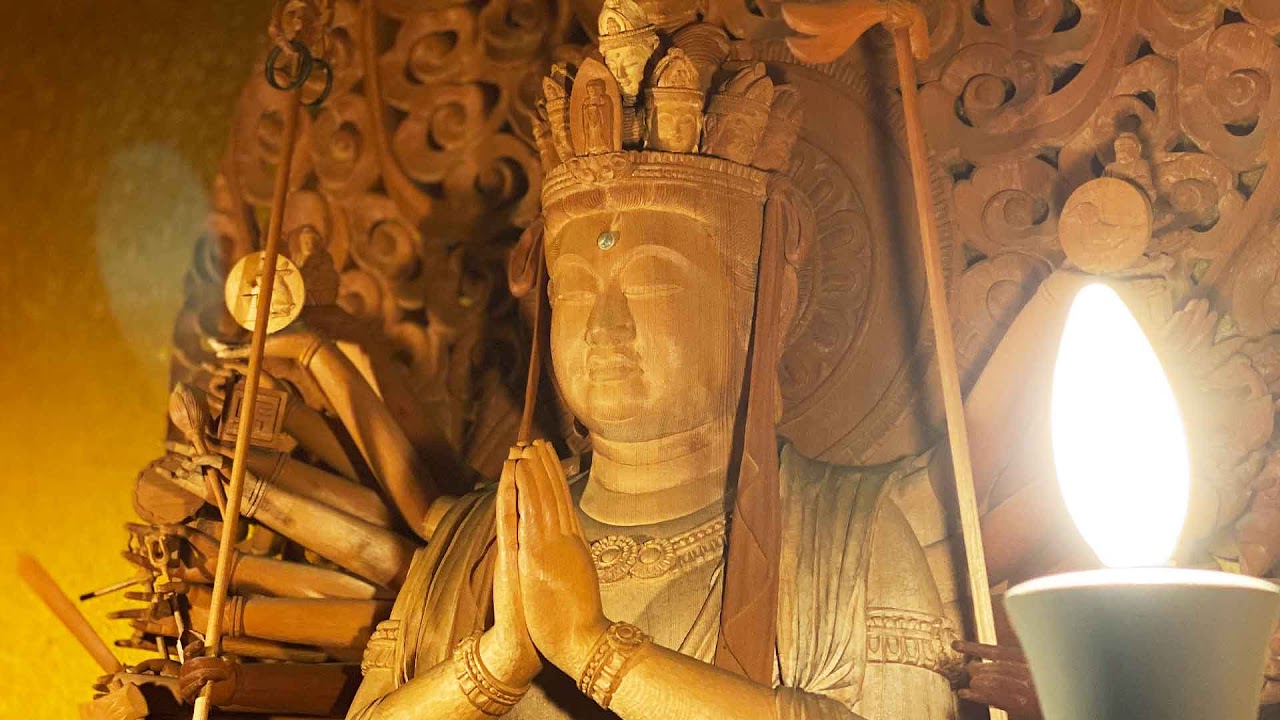
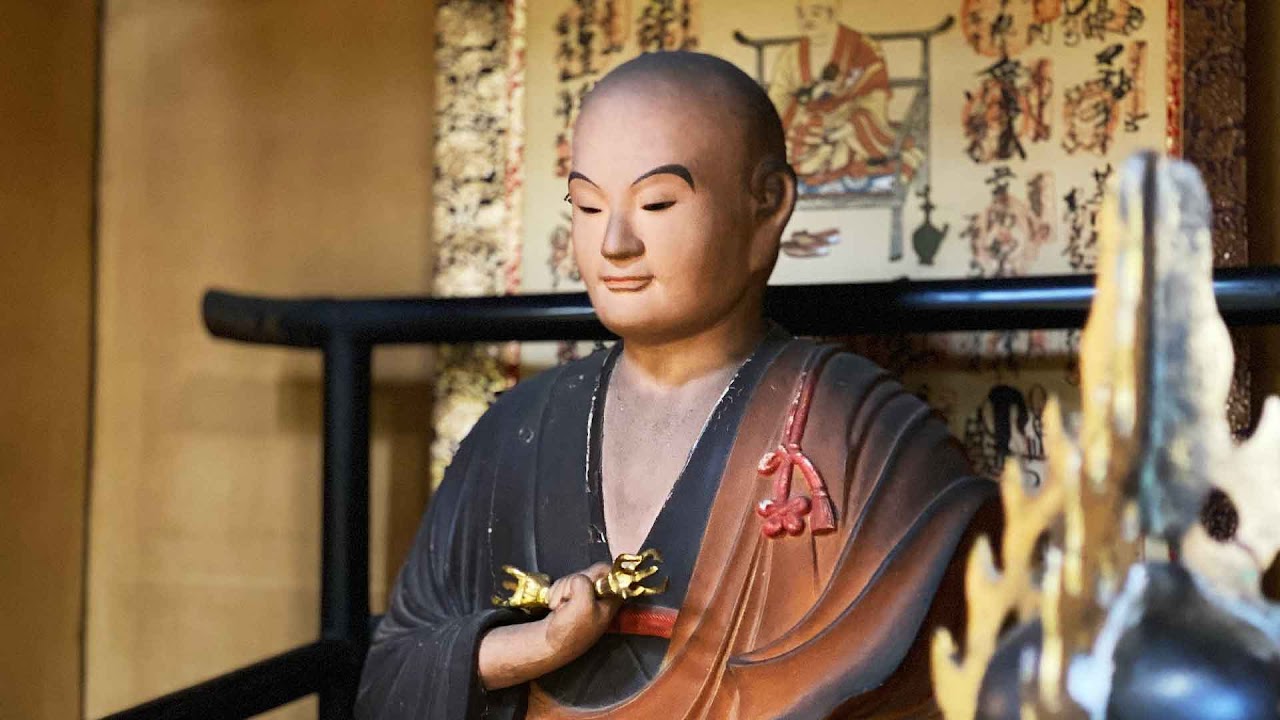
This hall was built by the 17th Chief Priest, Shinko Daioshon, to enshrine Senju Kannon (Thousand-armed Avalokiteshvara), the special object of devotion of Myoren Shonin, the temple's founder. The statue was commissioned from the master Buddhist sculptor Myokei Matsumoto.
Today, it serves as a training hall for sutra copying, Buddhist painting, Zen meditation, and contemplation. With space for 60 practitioners to sit in meditation, it offers a tranquil setting for communing with the Buddha.
Main Building
Edo-period Temple Lodging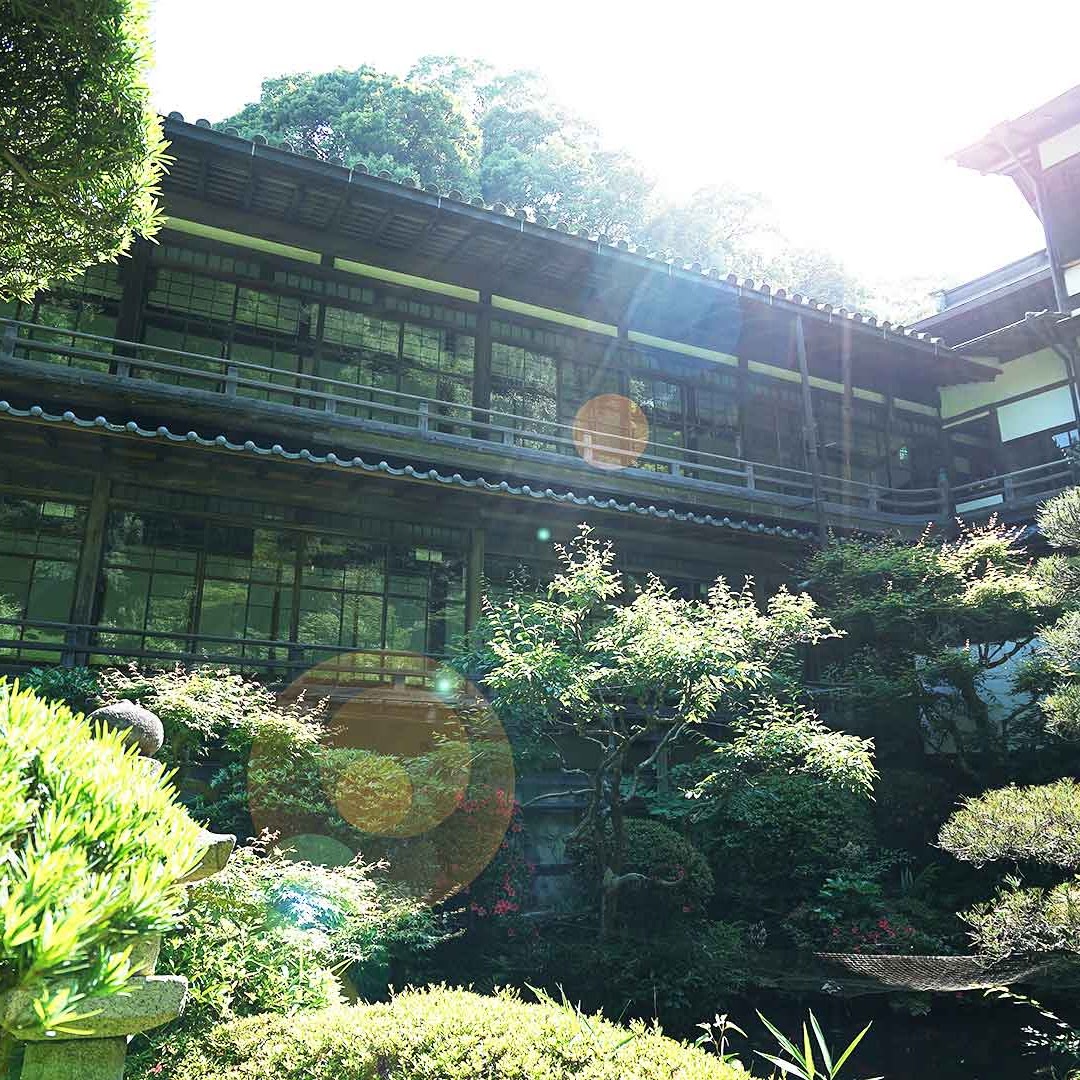
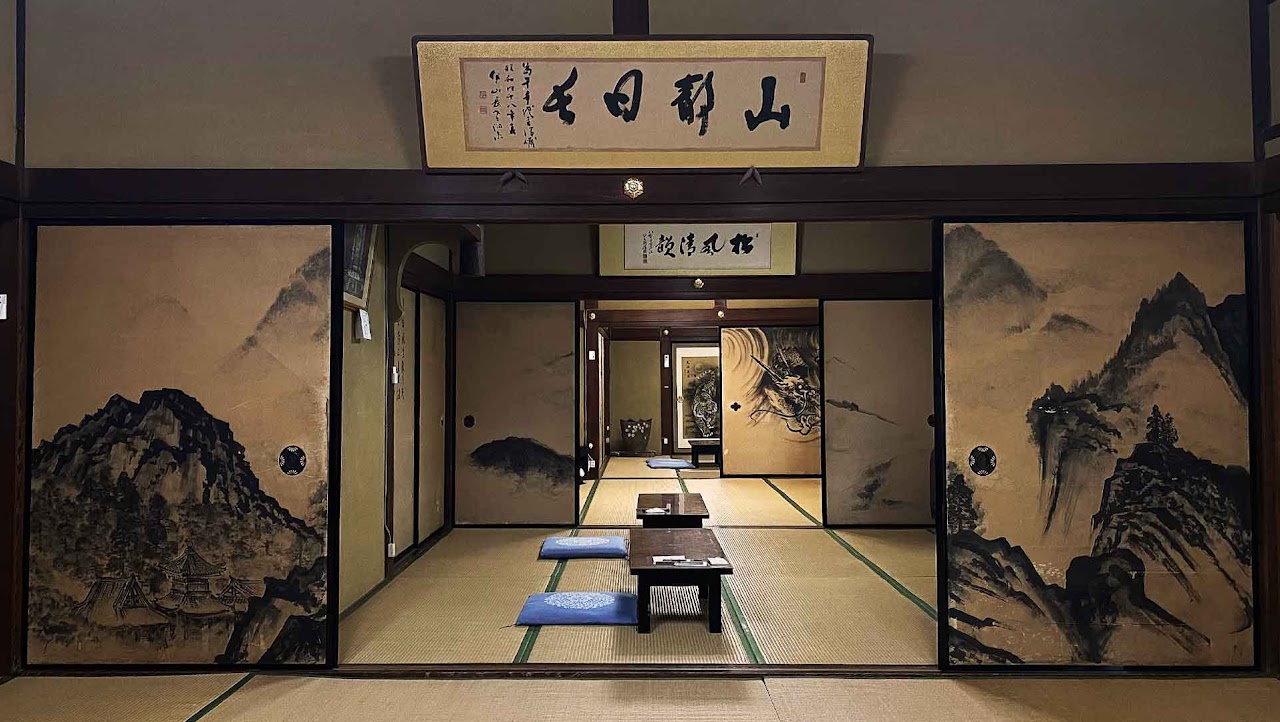
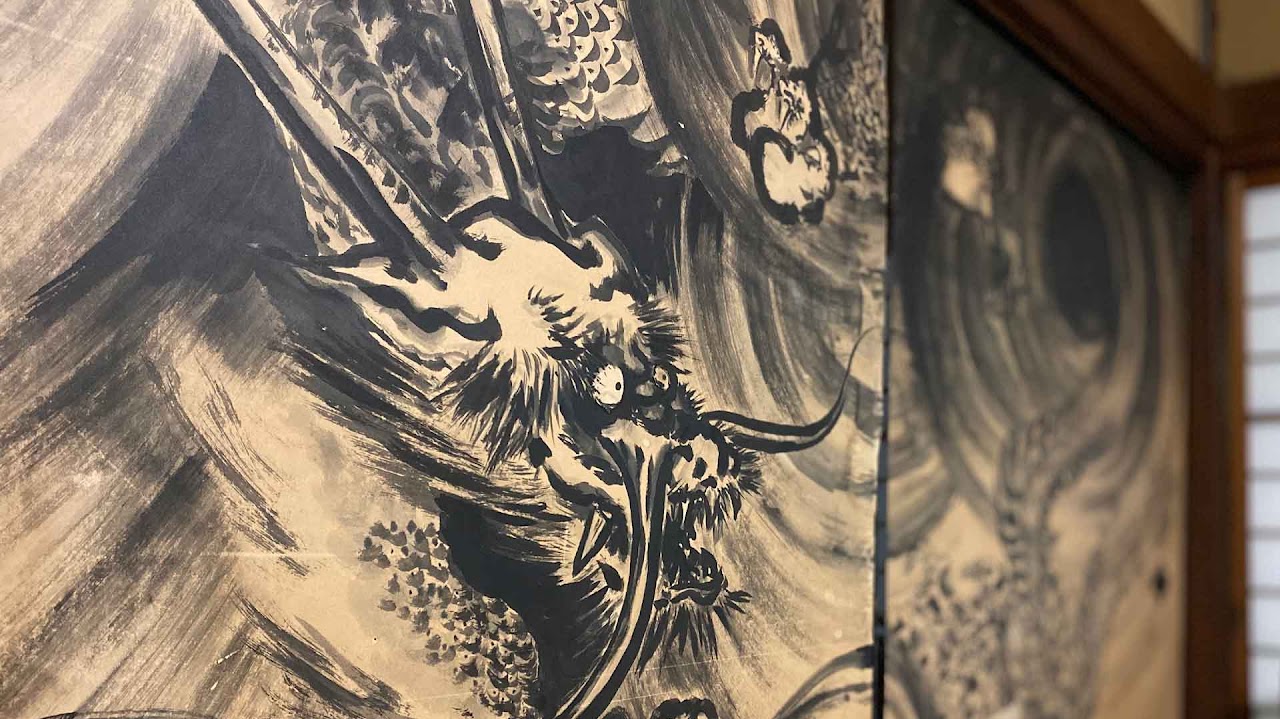
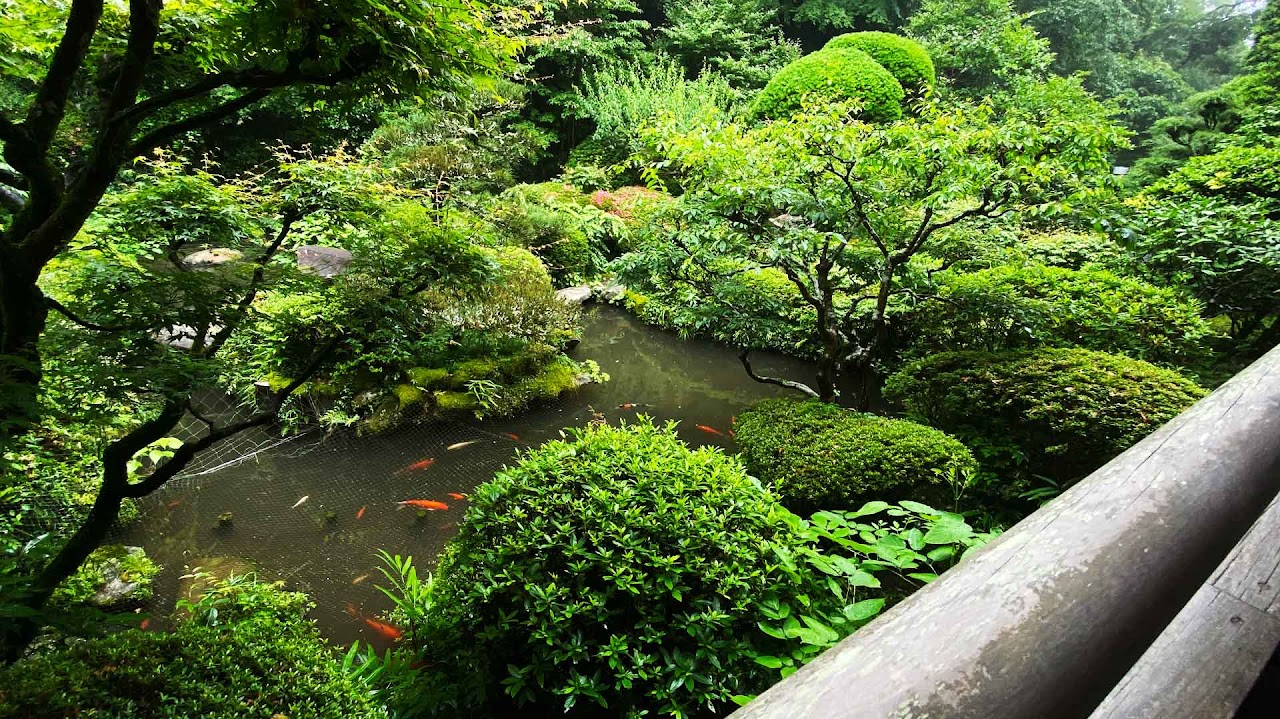
The Main Building, inherited from the Edo period, is the second oldest structure on Mt. Shigi. Visitors can appreciate the magnificent fusuma paintings and the inner garden viewed through rippled Taisho-era glass -- an atmosphere rich with nostalgia and romance.
It is also home to the only pond garden (chisen teien) on Mt. Shigi, through which visitors may stroll. The splendid vista using the main hall of Chogosonshi-ji as borrowed scenery (shakkei), the sal trees (natsu-tsubaki) deeply connected to Buddhism, and other features make this a place of serenity for all who visit Mt. Shigi.
New Building
Lodging & Training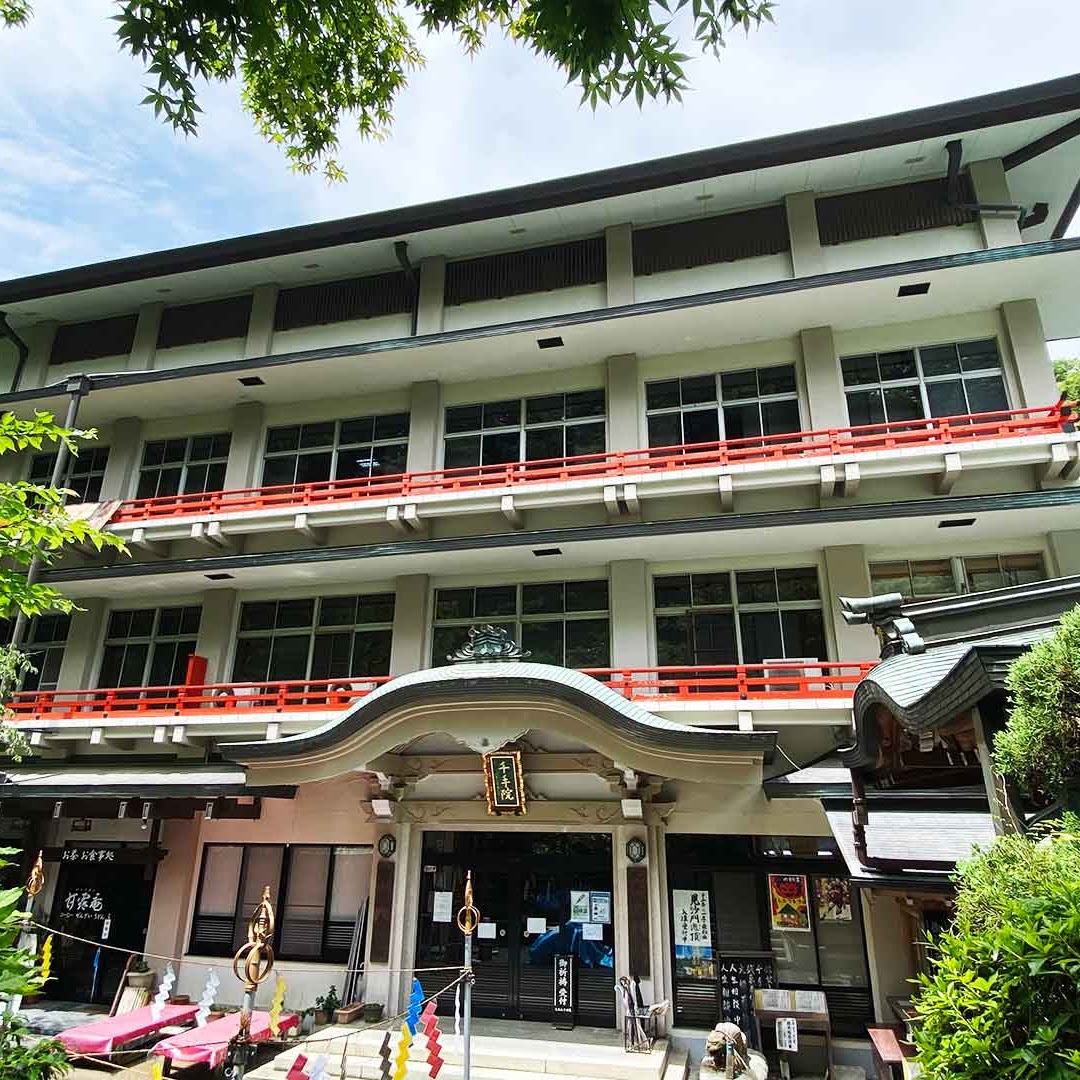
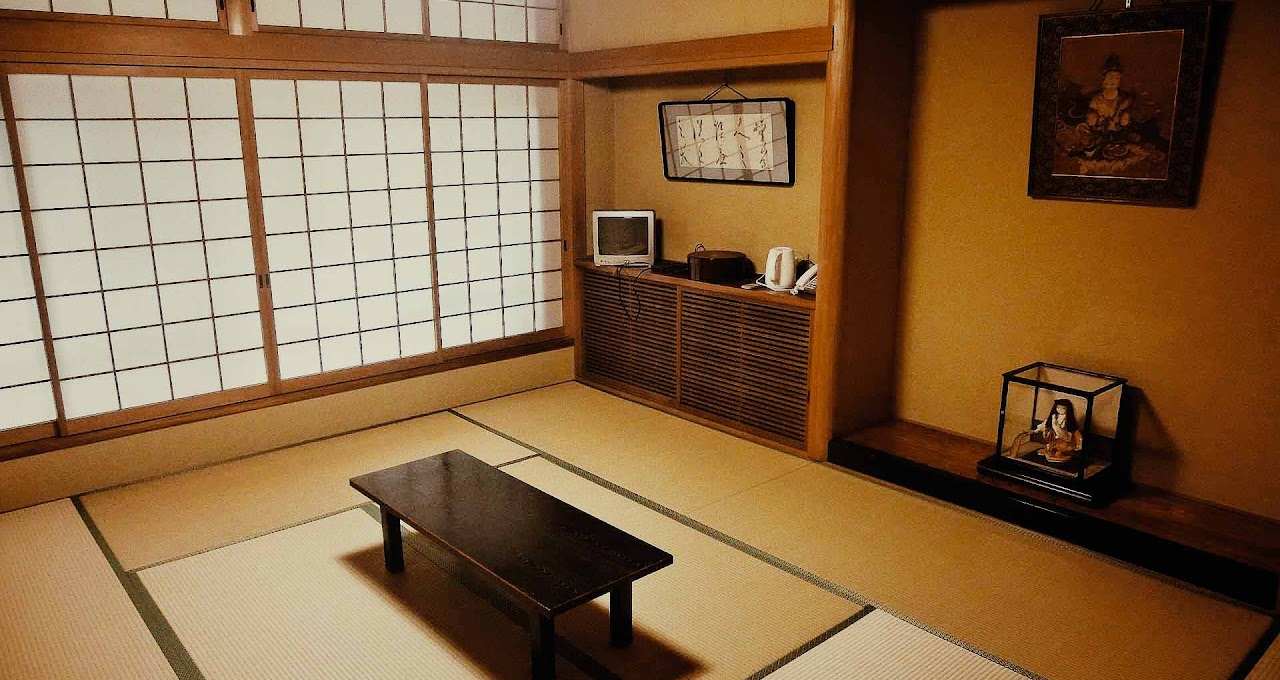
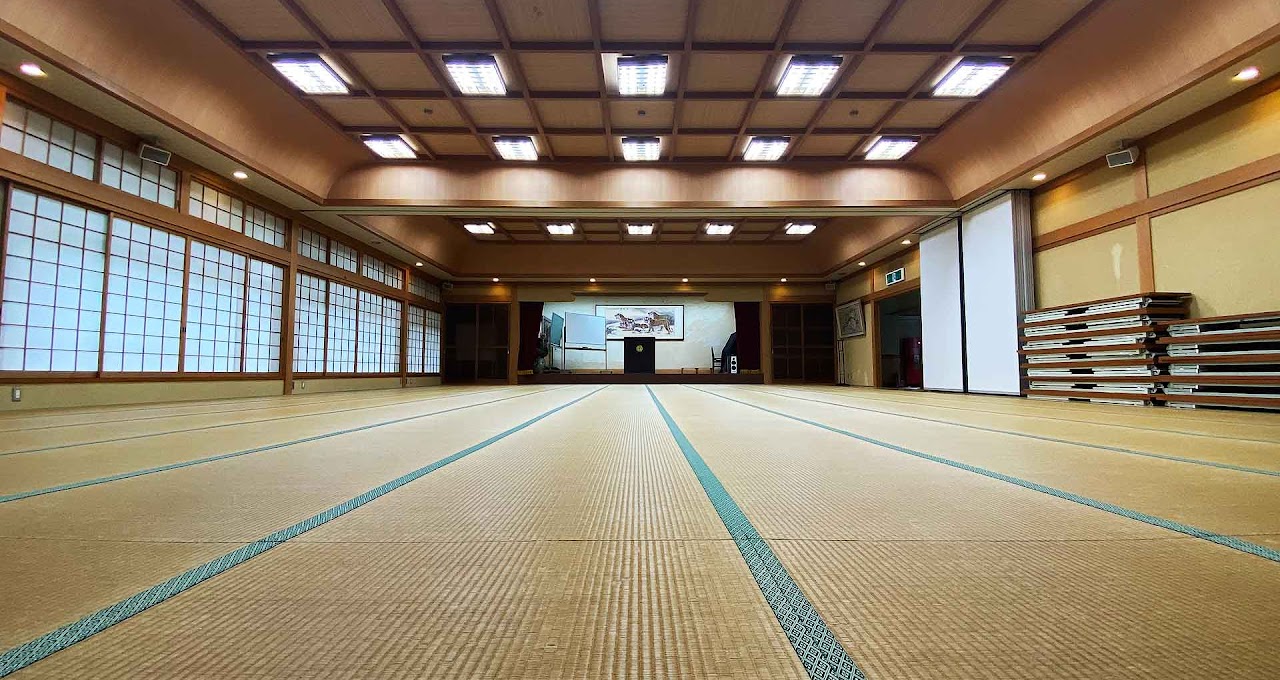
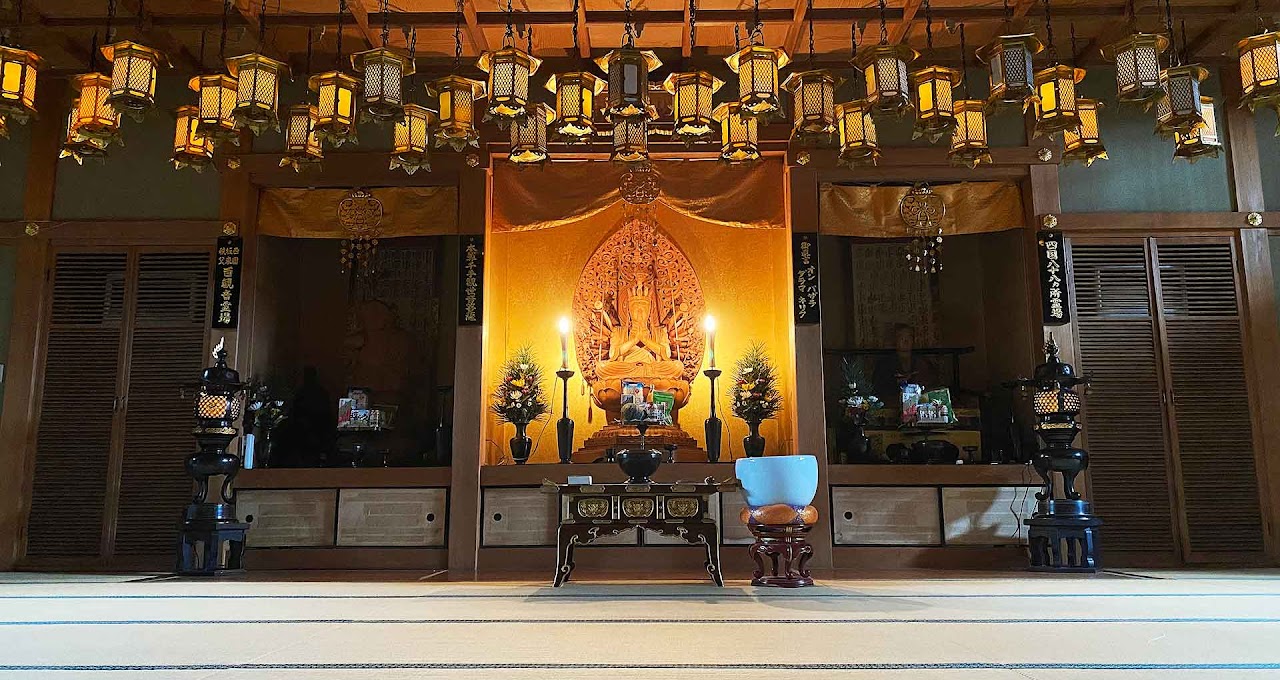
The New Building features comfortable modern guest rooms on the second floor, a grand hall on the third floor accommodating up to 150 people, and the Daihikaku training hall on the fourth floor with space for 60 Zen meditation practitioners. It is well suited for school excursions, corporate retreats, leisure group travel, and training camps.
Please do not hesitate to contact us if you wish to use any of these facilities.
Branch Temples
In order to bring the teachings of Bishamonten to as many people as possible, Senjuin has established branch temples both within Japan and abroad. Prayer rituals and training experiences are offered in Takayama (Nara), Taiwan, Otsu, Kakogawa, and Kobe.
What Senjuin Holds Dear
For over eleven hundred years, Senjuin has kept the sacred Goma flame burning without interruption. This is our enduring vow -- to pray unceasingly for the happiness of all people, in every age.
A temple should not be a place set apart, but rather a place that anyone may visit with ease. It is with this spirit that we welcome all visitors each and every day. We warmly invite you to come.